Carbon Credits from Biodiversity Conservation and Wetlands: When the Value of Nature Becomes a Resource for Sustainable Development
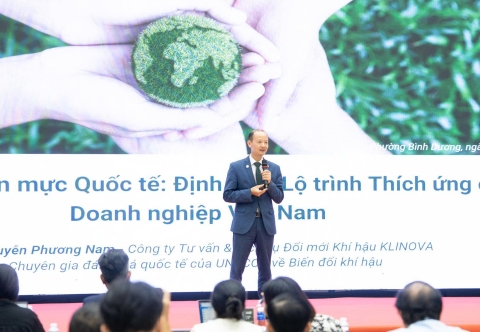
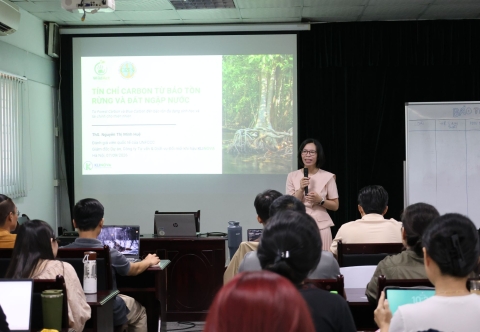
Ms. Hue NGUYEN – Project Director of KLINOVA, joined and presented at the thematic session "Carbon Credits from Biodiversity Conservation and Wetlands". Held on September 7, 2026, as part of the 2026 Short Course on Biodiversity Conservation (BDC26) organized by WildAct and the Institute of Resources and Environment (CRES, VNU), the session delivered in-depth perspectives on the interconnections among nature conservation, carbon markets, and sustainable development finance.
(1) A Comprehensive Update on Current Legal Frameworks and Carbon Market Operational Mechanisms
The presentation clarified the pilot roadmap for quota allocation, the offset trading mechanism via the domestic carbon exchange, and the brokerage role of securities companies.
(2) From "Natural Capital" to the Economic Value of Ecosystems
A key highlight of the session was the "Natural Capital" approach, framing nature not merely as resources requiring protection, but as a foundation that generates extensive economic and social value.
Ecosystem services, such as climate regulation, flood control, habitat support, as well as cultural and ecotourism values, demonstrate that nature conservation can be viewed as a long-term investment in sustainable development.
(3) Bridging Forest Carbon and Blue Carbon
The session provided participants with a clearer understanding of carbon accumulation and storage mechanisms across natural ecosystems, spanning forests, mangroves, seagrass beds, and biomass sinks.
In particular, practical data and insights regarding mangrove carbon stocks in Vietnam helped illustrate the vast potential of natural ecosystems in contributing to emission reduction goals and the green transition.
(4) Monetizing Conservation Value: Aligning Nature Protection with Community Livelihoods
By connecting mechanisms such as PFES and the carbon market, the session opened up new avenues for transforming the value of forests and ecosystems into economic resources. This approach supports the protection and restoration of nature while remaining closely tied to local community livelihoods.
For KLINOVA, participating in BDC26 was a meaningful opportunity to connect technical expertise with the young generation pursuing biodiversity conservation and sustainable development. It also served as a platform to spread novel approaches regarding carbon markets, climate finance, and the value of natural capital.