
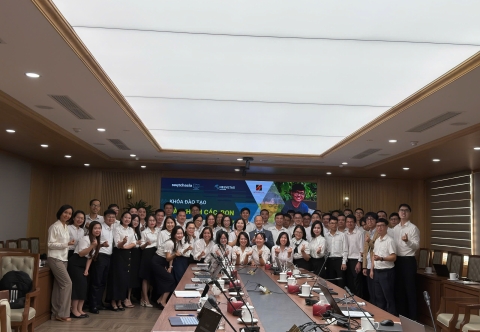
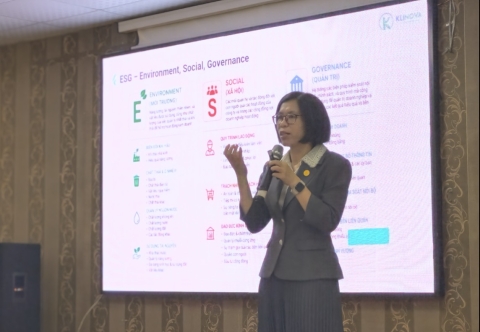
Implemented under the EU-funded Circular Economy in Cocoa Production Project, the programme brought together approximately 60 participants from Agribank's headquarters and branches across Northern Vietnam and Hanoi. The training was delivered by KLINOVA's experts, including Dr. Nguyen Phuong Nam, General Director, and MSc. Nguyen Thi Minh Hue, Project Director, alongside supporting trainers.
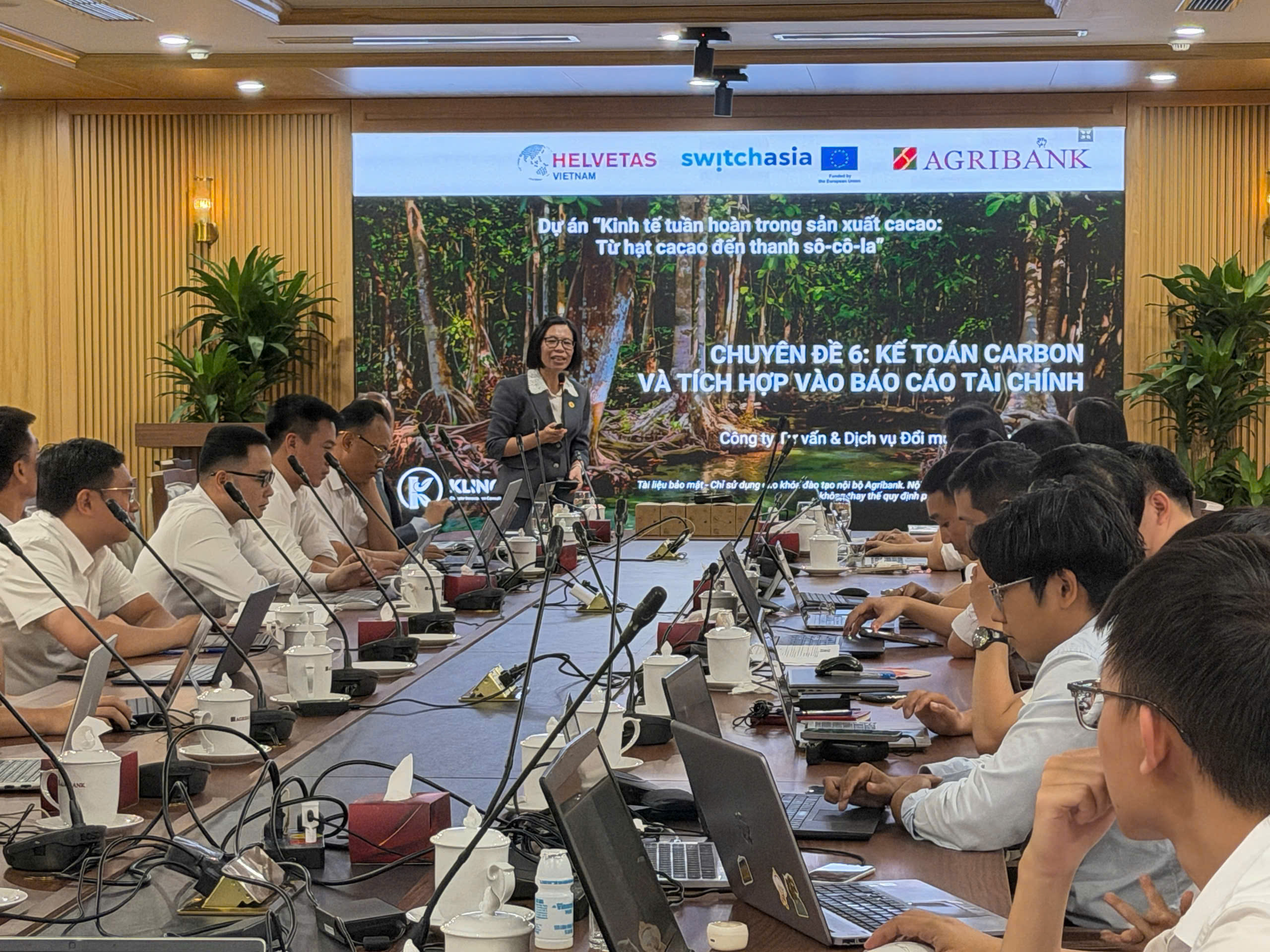
The first day introduced participants to global and Vietnamese carbon markets, carbon trading mechanisms, the distinctions between carbon credits and emission allowances, and the carbon project development cycle. Key technical topics included Monitoring, Reporting and Verification (MRV), as well as fundamental principles such as additionality, baselines, carbon leakage and permanence. Participants also explored the factors influencing carbon credit valuation and received updates on Vietnam's regulatory framework and carbon market development roadmap for 2025–2030.
Building on these foundations, the second day focused on the application of carbon finance in banking operations. Topics included carbon-related credit risk assessment, the implications of carbon markets for clients' business activities and cash flows, carbon accounting, and the integration of carbon credits into corporate financial statements. Particular attention was also given to financing carbon projects, green transition initiatives and circular economy projects.
A key feature of the programme was its emphasis on practical exercises and case studies throughout the two days. Participants worked with client and project information to assess carbon credit-related revenue streams, identify legal, market and cash flow risks, evaluate financing feasibility and explore appropriate financial structures. This practical approach helped connect carbon market knowledge with the real requirements of credit appraisal, lending decisions and banking risk management.
Carbon markets are not merely creating new mechanisms for pricing and trading emission reductions; they are also reshaping how businesses approach production, operations and financial strategies. As carbon-related factors increasingly influence business costs, revenue streams and competitiveness, they are becoming important considerations for financial institutions when assessing clients and investment projects.
From KLINOVA's perspective, one of the key challenges is bridging the gap between technical climate knowledge and its application in financial decision-making. A project with the potential to generate carbon credits does not necessarily guarantee that those credits can be issued or successfully commercialised. Additionality, methodologies, MRV requirements, legal compliance and market demand all need to be carefully assessed before potential carbon revenue is incorporated into a project's financial projections.

This is why the training went beyond introducing carbon market mechanisms to address practical banking considerations, including carbon accounting, cash flow analysis, risk assessment and project financing. KLINOVA believes that strengthening these assessment capabilities can help banking professionals develop a more comprehensive understanding of both the opportunities and risks associated with green transition projects, rather than relying solely on anticipated revenue from carbon credits.
Through technical training and knowledge-sharing initiatives, KLINOVA aims to strengthen the connection between climate expertise, businesses and the financial sector. An effective transition towards a low-emission economy requires more than technological solutions and sustainable business models; it also depends on a financial system equipped to identify, evaluate and support projects that contribute to this transition.




_cr_480x332.png)
