In the context where the trend of green transition and sustainable development is increasingly becoming a priority in many countries, the global climate finance market is entering a restructuring phase to adapt to new realities. Political and economic fluctuations have created significant pressures, forcing many major climate initiatives to review their operational strategies. Speaking to VNEconomy, Dr. Nguyen Phuong Nam, CEO of KLINOVA, shared in-depth analyses on one of the notable current situations and trends in climate finance worldwide.
.JPG)
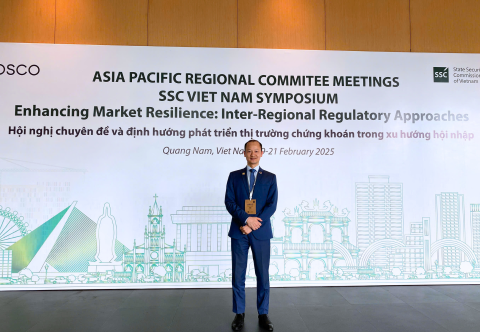
Dr. Nguyen Phuong Nam, CEO KLINOVA
A typical example is the Net Zero Asset Managers Initiative (NZAM) - a network of investment managers worth trillions of US dollars committed to supporting the net-zero emissions goal. The Net Zero Asset Managers Initiative (NZAM) was launched in late 2020 with the expectation of creating a network of global investment managers jointly committed to international net-zero emissions targets. At that time, the NZAM Initiative had participation from about 30 professional organizations with total assets under management of nearly 9 trillion USD - a figure demonstrating the financial market's strong confidence in the future of green investment. Just 5 years later, by early 2025, this network had expanded to over 325 members with total assets exceeding 57 trillion USD. However, behind that growth lie major challenges stemming from global political and economic volatility.
Restarting the NZAM Initiative: A Turning Point in Green Investment
In early 2025, the NZAM Initiative was forced to temporarily suspend operations after several major financial institutions, notably including BlackRock - the world's largest asset manager, announced their withdrawal due to legal and political pressure in the US. The "anti-ESG" movement led by conservative politicians made participation in climate initiatives viewed as "political interference in investment." Under this pressure, NZAM had to review its entire operational mechanism, from commitment frameworks to reporting methods, to ensure compatibility with different legal contexts across regions.
After the suspension period, the NZAM Initiative was restarted with a spirit of being "more realistic and flexible." Instead of binding all signatories to a unified goal - achieving net-zero emissions by 2050 - the initiative allows members to set their own targets based on market conditions, legal frameworks, and the internal capacity of each investment organization.
This is a strategic adjustment that helps NZAM expand its sphere of influence and avoid political conflicts while maintaining its core philosophy: "Viewing climate risks and opportunities as central factors in investment management." It can be said that NZAM is now entering a phase of "adaptation for sustainable development," accurately reflecting the spirit of the new era.
Notably, many opinions suggest that the NZAM Initiative's "loosening" of the commitment to achieve net-zero emissions by 2050 among countries is a step backward for the global green investment movement. However, in reality, this is a necessary strategic adjustment, demonstrating greater maturity of the global green investment movement.
In the early stages, climate initiatives were often built with a strong spirit of political commitment, setting very high goals to inspire. However, when it came to implementation, differences in legal frameworks, market capacity, and economic-political pressures between regions made the "rigid commitment" model difficult to maintain.
The NZAM Initiative's adjustment toward greater flexibility is a way to maintain inclusiveness and adaptability. Instead of forcing all parties to move at the same pace, this initiative allows organizations to follow different paths but head toward a common destination. This is particularly important in the context where the US - the world's largest financial economy - is witnessing a strong anti-ESG wave, while Europe, Canada, Japan, and Australia still maintain strict and serious climate policies.
In reality, we should not view "loosening" as a retreat but rather see it as a shift from "political commitment" to "practical commitment." Flexibility helps initiatives like NZAM survive and expand rather than collapse due to divisions over political views and capital market absorption levels. This is evidence that green investment is transitioning from a movement to a professionalization phase - where investors focus on effectiveness based on data and actual impact rather than slogans. In the long term, this approach will strengthen market confidence in sustainable investment because it is based on principles of voluntariness, transparency, and adaptation rather than imposition.
Impact on Vietnam
For developing countries, including Vietnam, the restructuring of Net Zero strategies by global investors will be a "positive" factor if we know how to seize the opportunities of this moment and will be "negative" if there is wavering and inconsistency in development strategy. When large financial institutions are adjusting investment portfolios to minimize political and legal risks in the US or Europe, they will tend to seek emerging markets with stable policy environments, clear green development orientations, and long-term growth potential.
Vietnam, with its commitment to achieve net-zero emissions by 2050, affirmed by the Prime Minister at COP26, has emerged as a potential destination in the global green finance flow. The Party and Government's perspective in formulating a national development strategy through the Quartet of Strategic Resolutions has also consistently affirmed to the international community the long-term green transformation direction.
Vietnam Stands Before a Golden Opportunity
When many large economies are dominated by internal political factors, global green capital will tend to shift toward countries with stable policy environments and clear commitments. If Vietnam accelerates institutional reforms, makes emission data transparent, and soon operates an effective carbon market, we can become a "transit point" for green finance in the region.
More importantly, achieving the Net Zero goal is not only an international responsibility but also an inherent development strategy. It is the path that helps Vietnam improve growth quality, reduce dependence on fossil energy, create green jobs, and elevate its position in the global supply chain.
Being steadfast, taking substantive action, and seizing transformation opportunities - that is how Vietnam both maintains its commitment and advances faster on the path of sustainable development.

In the trend of adjustment by global financial institutions, green capital is shifting toward emerging markets with stable policy environments, clear direction, and long-term growth prospects. Vietnam, with its commitment to net-zero emissions by 2050 along with strategic green transformation orientation, is assessed as a potential destination for this capital flow. Sectors such as renewable energy, green transportation, circular agriculture, and low-carbon production all align with national development priorities.
An important point emphasized is the completion of the domestic carbon market. Decree 119/2025/ND-CP has created the foundation for the pilot phase of the carbon market until 2028, before official operation from 2029. When implemented effectively, the carbon market will become a transparent emission pricing tool, supporting Vietnamese enterprises in accessing international funding and green financial mechanisms such as climate credit or carbon bonds.
However, to seize this golden opportunity, Vietnam needs to ensure policy stability and emission data transparency while enhancing greenhouse gas inventory capacity and standardizing the national data system. The article suggests that if Vietnam soon completes its institutional framework, builds a team of internationally qualified carbon credit experts, and operates an effective carbon market, the country can completely become Southeast Asia's green finance connection hub in the next decade.
In the context where the world is entering a phase of Net Zero strategy adjustment and restructuring of climate finance initiatives, Vietnam has a very large opportunity to become a destination for global green capital. Being steadfast with the net-zero emissions goal by 2050, while accelerating institutional reforms, enhancing emission data transparency, and effectively operating the carbon market, will create long-term competitive advantages for the economy. If this golden moment is well utilized, Vietnam will not only consolidate its international reputation but can also become the green finance center and carbon market of the Southeast Asian region in the next decade.
Excerpted from article published in Vietnam Economic Magazine – VnEconomy, Issue 46, November 17, 2025 at: https://vneconomy.vn/
The Minh



_cr_480x332.png)


_cr_480x332.JPG)