On May 26, 2026, in Ho Chi Minh City, the International Institute for Sustainable Development (IISD), in collaboration with the Foreign Trade University (FTU) and with support from Global Affairs Canada, organized a specialized training workshop on the European Union’s Carbon Border Adjustment Mechanism (CBAM) for Vietnamese exporters in the steel and aluminium sectors.
The event took place as CBAM entered its official implementation phase on January 1, 2026, when financial obligations began to apply to carbon-intensive goods imported into the European Union. For Vietnam—one of the key exporters of steel and aluminium products to the EU market—understanding emissions accounting, reporting, and verification requirements is becoming increasingly important for maintaining competitiveness and market access.

The workshop brought together representatives from government agencies, international organizations, technical experts, and the business community to discuss practical challenges associated with CBAM compliance. Discussions focused on the experiences of Vietnamese enterprises in collecting emissions data, establishing monitoring and reporting systems, meeting independent verification requirements, and addressing issues related to compliance costs and supply chain transparency.
A key focus of the programme was the latest developments in EU CBAM regulations, methodologies for calculating embedded emissions, and requirements for Monitoring, Reporting and Verification (MRV). Speakers emphasized that verified actual emissions data will play an increasingly critical role under CBAM, replacing default values that are often significantly higher and may result in substantially greater CBAM-related costs for businesses.

Representing KLINOVA, Dr. Nguyen Phuong Nam – UNFCCC International Reviewer and CEO of KLINOVA – delivered a presentation on emissions monitoring, reporting, and verification under CBAM. His session covered the development of monitoring plans, system boundary identification, emissions data collection processes, preparation of verification documentation, and the expectations of EU-accredited verification bodies. Dr. Nam also shared practical examples from steel and aluminium manufacturing facilities and highlighted common errors that may lead to compliance risks or increased carbon costs.
Another topic that attracted significant interest from participants was the relationship between CBAM and the development of Vietnam’s domestic carbon market. Experts discussed the possibility of reducing CBAM liabilities through carbon prices paid in the country of origin. This could create opportunities for Vietnamese businesses to lower future CBAM costs as the domestic Emissions Trading System (ETS) becomes fully operational and gains recognition under EU regulations.
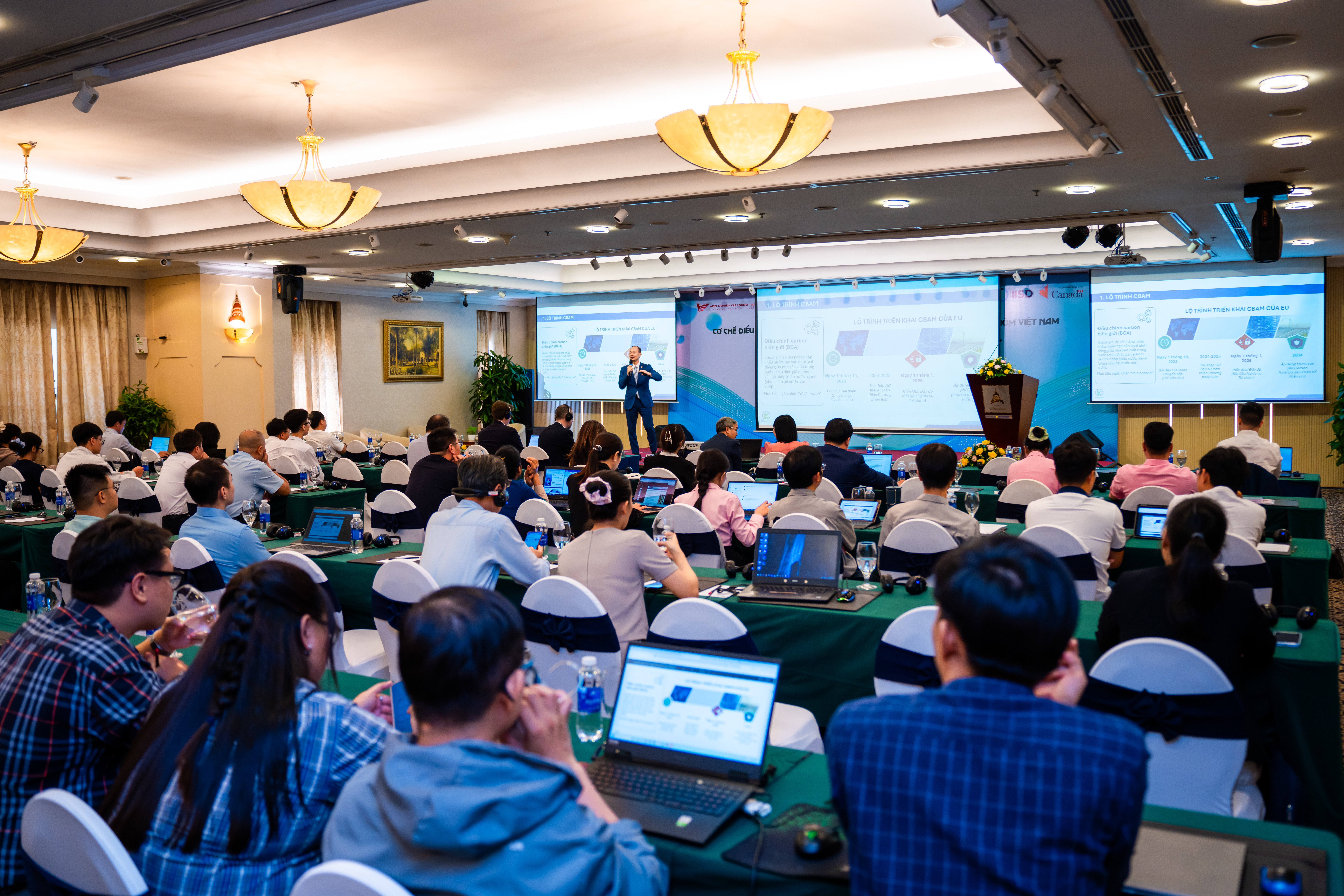
Beyond the technical sessions, a high-level panel discussion featuring representatives from the Ministry of Industry and Trade, IISD, major steel producers, and international experts explored Vietnam’s priorities in preparing for CBAM. Key discussion points included the development of emissions data infrastructure, strengthening MRV capacity, establishing a domestic carbon market, expanding business support mechanisms, and promoting international cooperation to help mitigate the impacts of emerging carbon-related trade requirements.
As emissions transparency and supply chain accountability become increasingly important conditions for participation in international markets, CBAM represents not only a compliance obligation but also a catalyst for businesses to improve carbon management, enhance operational efficiency, and accelerate their transition toward low-carbon production models. The workshop provided participants with up-to-date information, practical insights, and concrete recommendations to help them proactively adapt to the evolving landscape of global trade and climate-related regulations.
- Huu Hoang -



_cr_480x332.jpg)



_cr_480x332.JPG)